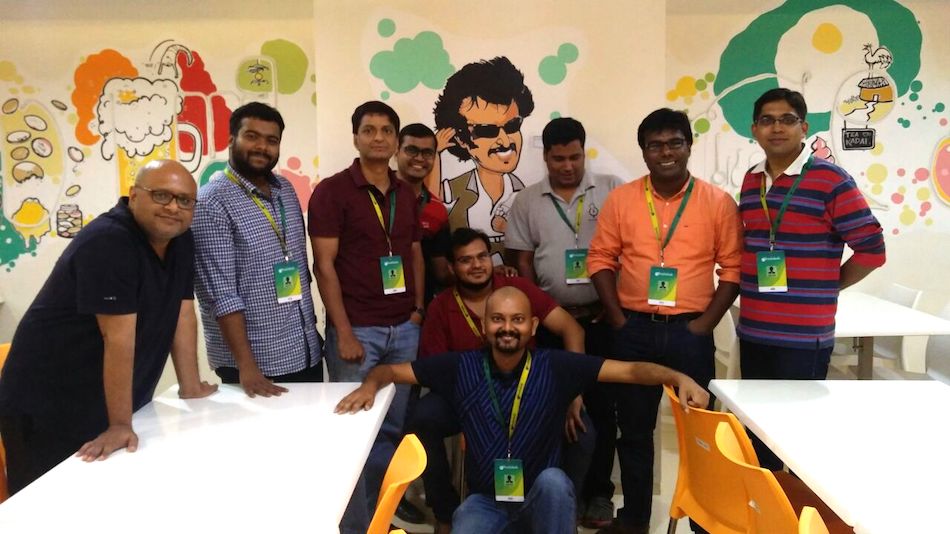
Upekkha’s first cohort of startups at Freshworks’ office in Chennai, India. Photo credit: Upekkha
You can’t always believe everything an accelerator promises. This is a lesson most startup founders – and scribes like me – learn the hard way.
Most accelerators lure startups with the promise of support – mentors, network, and funding. But not much of what’s promised is tangible. There things turn fuzzy. Founders who give away a chunk of their equity – 7 to 15 percent usually – get a thrill when their startup gets into an accelerator, maybe enjoy media limelight as well. But few, if any, see an acceleration in key business metrics.
In B2B SaaS, getting to US$8,000 MRR should not be that hard. But getting from US$8,000 to US$80,000 MRR is very hard. Most startups die in that period.
Prasanna Krishnamoorthy saw this far too often from the founder’s shoes. In the last 10 years, he has worked with around 120 startups as the CTO-in-residence with Microsoft Accelerator in Bangalore, co-founded a startup himself, and felt scaling up pangs acutely. He knew what mattered most for a startup’s survival and growth was its revenue and user base.
So when Krishnamoorthy quit Microsoft in January 2017 to start Upekkha, an accelerator for SaaS (software-as-a-service) startups, he went unorthodox. He stuck his neck out and chose to tie his accelerator’s success to that of its startups in the most tangible way he could think of: by promising startups a revenue outcome by the end of the accelerator program. If the startups did not hit the revenue milestone, Upekkha would get no equity. That’s real skin in the game, he felt.
Now, seven months after it took in its first cohort of four startups selling business-to-business (B2B) SaaS, Upekkha steps out of stealth, revealing its outcome thus far. Monthly recurring revenues (MRR) of the current batch of startups – AppKnox, InterviewMocha, iZooto, and SocialPilot – have grown by 88 percent on average, it says.
“In a B2B SaaS business, getting to US$8,000 MRR should not be that hard. But getting from US$8,000 to US$80,000 MRR – that’s about a million dollars in annual recurring revenue (ARR) – is very hard. And most startups die in that period,” Krishnamoorthy says. “The mortality rate of startups is the highest in the US$100,000 to US$1 million annual revenue phase. That is where I wanted to help.”
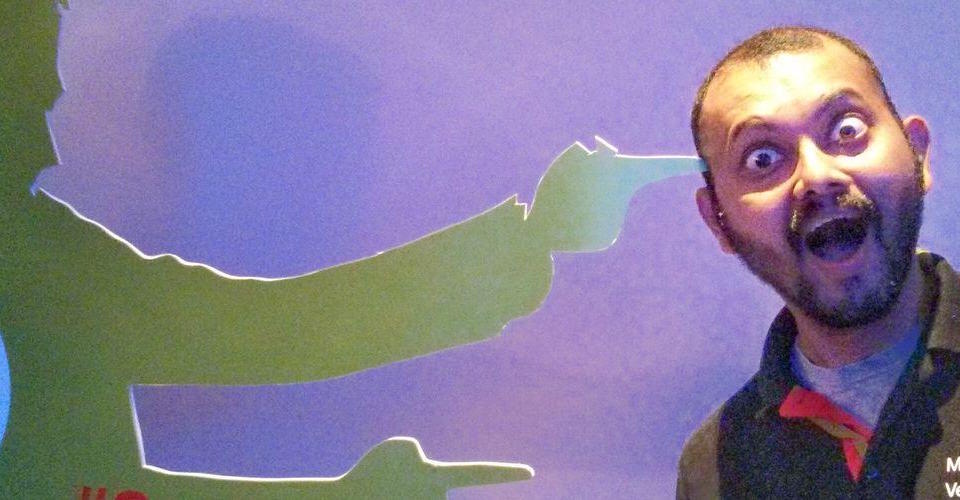
Upekkha founder Prasanna Krishnamoorthy. Photo credit: SaaSx
The first step Krishnamoorthy took when he decided to start Upekkha was to reach out to others in the SaaS startup ecosystem – successful founders, mentors, and investors.
“I spoke to a lot of them discussing what should I do, how should I do that, and so on. Iteratively, we came to the outcome-based model of Upekkha. The beauty of SaaS is that there’s only one metric that matters – that’s revenue. So, that means only if we can achieve that metric and build something that is milestone-based, will Upekkha get to its product-market fit.” That’s the concept.
Hike across the valley of death
The set of scalable, structured frameworks for startups Krishnamoorthy had co-created during the last three years with Microsoft Accelerator came in handy. He had seen startups apply those and break the death-hold phase.
“In the SaaS business, if you get to a million-dollar revenue stage, you should be breaking even and at least a little bit cash flow positive by then. Which means, you will then have a lot of options in terms of how you want to grow the company beyond that: take funding, stay bootstrapped, and so on,” he explains.
Post US$1 million ARR, founders can decide on the next phase of growth consciously, without getting forced into taking external capital because they are starving.
See: The unfair advantage Indian SaaS startups have over counterparts around the world
Fine words butter no parsnips. So, I spoke to all four of the startups in Upekkha’s first cohort to find out how the accelerator helped each of them hit revenue milestones.
When mobile security startup AppKnox joined the Upekkha program, it was stuck with a flat revenue curve for around six straight months.
The startup, founded in 2014 by bug bounty hunters Harshit Agarwal, Subho Halder, and Prateek Panda, graduated from the JFDI Asia accelerator program in Singapore and later the Microsoft Accelerator in Bangalore. It raised US$640,000 from SeedPlus, a fund from Jungle Ventures, Infocomm Investments, Accel Partners, and RNT Associates, in a pre-series A funding round in August 2016. Series A would come after six to eight months, they had thought. But the global funding winter that was felt in India quite severely toppled those plans.
“Our monthly revenue was roughly around US$22,500 and we didn’t know how to scale it up. We were under pressure from our investors as well,” Harshit Agarwal, co-founder and CEO of AppKnox, recalls.
But how? The starting point was to identify who among the co-founders would take charge of product management. Halder, who was AppKnox’s tech head, decided to wear that hat. “Whoever wears it should be the one talking to customers as well. Prasanna coached Halder on how to interview customers, what should be the questions, how to get started on their requirements, and so on,” Agarwal tells me.
This exercise of talking to their existing customers – AppKnox had around 35 paying clients around then – gave the team clarity on what features to build, how much value those would give the customer, and the cost of building it. Over the next month, they also zeroed in on their best customer segment – financial businesses like banks and other enterprises. They also played around with their business models. All these exercises helped them achieve a better product-market fit.
“It helped us break that shackle and we doubled our revenue in the first four months during the program,” Agarwal says.
The nurturing village
Krishnamoorthy knew early on that for Upekkha to succeed it would need much more than his own efforts. It would take a village to raise a startup, he believed.
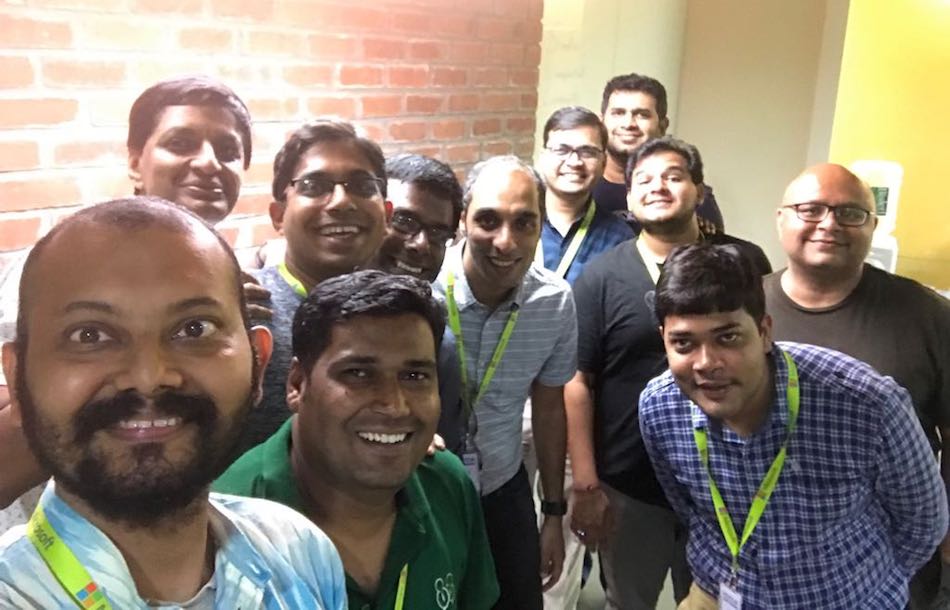
Upekkha’s first cohort of startups at Microsoft Accelerator in Bangalore, India. Photo credit: Upekkha
Aneesh Reddy, co-founder and CEO of Capillary Technologies; Sharad Sharma, co-Founder of tech thinktank iSPIRT; Ravi Narayan, global director with Microsoft; Professor Saras Sarasvathy, founder of the effectuation theory; and Pallav Nadhani, co-founder and CEO of FusionCharts, are some of the key ecosystem folks who brainstormed with Krishnamoorthy for over a year.
Upekkha’s is a 24-month acceleration program, unlike the typical three to six months in other accelerators. Startups get a one-month free trial – just like any SaaS product. This is so that founders and the Upekkha team get to know each other and figure out if they fit. In the first six months, all the startups have to work a week every month on the ground with Krishnamoorthy and team in Bangalore or its neighboring city Chennai – billed the SaaS capital of India.
Initially, the startups focus on applying frameworks to figure out bottlenecks. Only after that are they introduced to subject matter experts. Most mentors – especially successful SaaS founders – do not have that much time to spare. They have their own businesses to run, after all. “As the problems are crystallized, the ensuing conversation with the expert becomes high quality,” Krishnamoorthy explains.
Microsoft Accelerator, Capillary, Accel Partners, CloudCherry, SignEasy, Locus, Freshworks, ChargeBee, Zapty, and Zarget have been hosting Upekkha and its cohort’s week-long sessions. Dozens of SaaS founders spent time talking one-on-one with the four startups in the cohort, taking them through lessons from their own experiences.
We suddenly realized that we were in a different world altogether. And that we were nowhere in the game!
Meeting some of these folks were like “divine intervention” to Vivek Khandelwal, co-founder and CEO of web push notification tool iZooto.
Khandelwal and his co-founders – Neel Kothari, Shrikant Kale, and Sachin Grover – had no clue about pitfalls on iZooto’s way ahead. They were all veterans from the services industry who knew how to sell and believed that iZooto was doing great.
They had started up in March 2016, grew iZooto to a 20-people team, catering to about 100 customers across India, Taiwan, and Japan by May 2017. “We believed what we were doing was ridiculously scalable and thought this would fly,” Khandelwal recalls. The company was clocking around US$240,000 ARR and most people whom the founders talked to told them that it was good growth.
The reason iZooto went for Upekkha was because the founders were new to SaaS business and wanted to learn the ropes quickly.
Upekkha got them talking to several SaaS experts. “We suddenly realized that we were in a different world altogether for one. And two, that we were nowhere in the game!” Khandelwal tells me.
As bootstrapped founders, they didn’t have a benchmark to chase and it was tough to set goals for the company. “Is breaking even good enough for you? Is hitting market standards good enough for you? Or should you go for market standards plus profit? We realized that we were working goal-less which is like a vicious loop,” he says. The first thing iZooto did at Upekkha was to understand the importance of clear goals and setting them.
See: What it takes to build a successful SaaS startup: founders share 5 steps
“Using the frameworks, feedback sessions, cohort-based-learning, we have been able to narrow down our market segment and improve the efficiency of our overall conversion funnel,” he says. Now, the company, he says, is on its way to hitting the US$1 million ARR milestone in another four to six months.
Pricing conundrum
Social media marketing tool SocialPilot is probably the most successful SaaS startup from Ahmedabad, the capital city of Indian state Gujarat. It has been taking on Hootsuite, Buffer, and other well-heeled rivals with a price advantage as well as a few other features.
Jimit Bagadiya, Tejas Mehta, and Shailesh Mistry started the company in July 2014 and the tool went live by November. The company was clocking over US$250,000 ARR when Bagadiya met Krishnamoorthy.
We had read a lot of theory from blogs and articles but listening to founders who had already achieved success gave us confidence and more clarity.
“We had read a lot of theory from various blogs and articles but listening to founders who had already achieved success by implementing various frameworks gave us confidence and more clarity. For example, we implemented one of the tips on pricing and increased our revenue by US$3,000 overnight,” Bagadiya says.
When SocialPilot joined Upekkha in May, it had three pricing plans for its customers – US$5, US$10, and US$15 plans. “We were selling our products at around 90 percent discount compared to our competitors. So we had a huge volume of customers – some 50,000 of them, and the churn was high,” Bagadiya recalls.
Churn rate is one of the biggest problems for SaaS products targeted at small-and-medium sized businesses (SMBs). Even if there’s a steady stream of customers coming in for trials and subscribe to the software, there’s a big enough number of them leaving after trying out the product for some time. The churn rate or the rate of attrition is the percentage of customers who discontinue their software subscriptions within a time period.
At Upekkha, SocialPilot was forced to talk to its customers, find out how they were using the tools, what they liked, what they didn’t, problems they were facing, how much they were willing to pay for a solution, and so on.
“After talking to around 80 customers, we realized that people were happily ready to pay us US$50 for our US$5 plan. That was a big learning,” Bagadiya says. “We doubled the price.” Much to their delight, there was no change in the number of customers upgrading to their priced plans. “Even when Prasanna asked us to double the price, we weren’t confident about the move. We believed if we did that we would lose our existing customers and our business would be hit. But nothing of that sort happened,” he says.
SocialPilot upped their pricing again last month, and the going has been smooth.
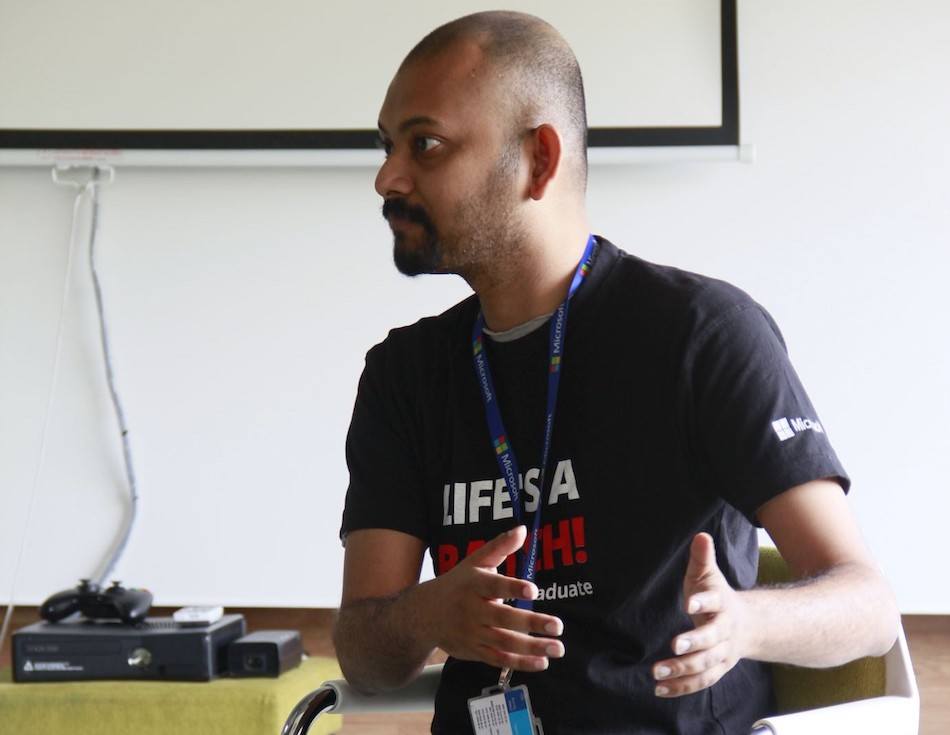
Upekkha founder Prasanna Krishnamoorthy. Photo credit: iKen
Pick your target customer
Six months ago, online assessment company InterviewMocha had an unpredictable sales cycle with clients as different as a one-person company to large enterprises like Credit Suisse, Nielsen, and CapGemini. All of InterviewMocha’s sales were inbound, and the 16-member team used to try and close everything that came their way.
The company, founded by Amit Mishra and Sujit Karpe, had started selling its assessment tools in February 2015. By May 2017, when they started the Upekkha program, InterviewMocha was clocking around US$15,000 revenue with around 300 inbound sales leads in a month.
In the US$299 segment, customers used to churn a lot. We had never calculated that churn rate.
At Upekkha, they started to track the lead flow closely, studying patterns. “We noticed that around 30 among those 300 leads were from large and medium-sized enterprises with revenues upwards of US$250 million and some even going more than a billion. We never used to track that aspect. We had a lot of smaller customers paying us, but never knew that there were huge companies who were not closing deals with us,” Mishra recalls.
InterviewMocha was charging US$299 for its tool. Realizing that they were losing around 30 potential clients who could pay much more than that every month was revelatory to the founders. “In the US$299 segment, customers used to churn a lot. We had never calculated that churn rate,” Mishra says.
When they started tracking the leads that weren’t closing, the founders understood that medium and large enterprises would not window shop for tech products and buy them unless someone actually sold it to them. “We need to get on a call with them, help them buy, and so on. We started doing that.”
In the first two months alone, the two founders had around 100 conversations with such clients. “That’s how we realized that the bigger companies think differently. They experience problems and then, they look for solutions. They are not just product shopping.”
That spurred the company to focus on the enterprise segment, instead of spreading themselves thin. The team learned to get on calls with potential customers, hear them out, and present how the InterviewMocha product could address their problems. ““We increased our product pricing from US$299 to US$700. We also hired a person to be in charge of customer success – to make sure that the customers are happy with the product and there are no hiccups.”
As for its sales cycle, “we are predictable now,” Mishra says. “We grew from US$15,000 monthly revenue to US$42,000 in six months. In March 2018, we will hit US$84,000 for sure,” he says, adding that the company is gunning for US$1 million in annual revenues by the middle of next year.
See: New trends in SaaS, and how Indian startups are grabbing those opportunities
With Upekkha’s outcome-based model, if a startup hits its milestones faster, Upekkha will earn more. It will take a single-digit percentage of revenue as well as equity based on the startup’s growth rate. The figures are arrived at after a discussion with the startups at the beginning of the batch, and it varies slightly based on the stage that the startup is in at the start of the program. Krishnamoorthy didn’t want to publicly disclose the percentages.
Every six months, Upekkha will take in a fresh batch of startups. The earlier cohort will join the Upekkha team in supporting the newbies and in this way learning will also be passed on batch-to-batch. Right now, Krishnamoorthy is in the process of selecting his second cohort.
India’s evolution from an IT services back office to a SaaS powerhouse is a work in progress. Initiatives like Upekkha are part of that process of building software products for the world.
This post The maverick accelerator that gets no equity if its startups don’t hit revenue milestones appeared first on Tech in Asia.
from Tech in Asia https://www.techinasia.com/upekkha-maverick-accelerator-gets-no-equity-if-startups-dont-hit-revenue-milestones
via IFTTT

No comments:
Post a Comment