
Image credit: Tech In Asia.
In Vietnam, local ecommerce player Sendo is an emerging force.
“In 2016, we tripled our gross merchandise value (GMV) from 2015, crossing US$50 million quite early in Q4. With the current rate we are going, there’s no reason we would slow down,” says Tran Hai Linh, founder and CEO of Sendo.
Sendo believes it can reach a GMV of US$1 billion by 2020. They think there are two key ways to crack Vietnamese ecommerce: focusing on micro-merchants and playing in tier two cities.
Micro-merchants are important to ecommerce
Vietnam is filled with micro, small, and medium enterprises (MSMEs) In fact, 98 percent of Vietnamese enterprises are MSMEs. They form 51 percent of the labor force and create 1 million new jobs each year.
Ecommerce helps these MSMEs get more customers and income, and also helps buyers improve their quality of life.
98 percent of Vietnamese enterprises are micro, small, and medium enterprises (MSMEs).
Sendo primarily works with MSMEs such as single-person merchants, married couples, or businesses of less than 10 people.
Their goal is to help these merchants push goods to people across the country at low delivery costs. “We provide middle to low-end buyers countrywide with access to affordable products. Rural people can enjoy the same product with the same quality like urban people,” says Tran.
These local enterprises take full control of their inventory, down to customer service. Merchants can even withdraw earnings on a daily basis.
“After 48 hours, if there is no complaint from the buyer, we automatically transfer earnings to the Senpay wallet. Small merchants prefer daily withdrawals for capital rotation as they need money to stock products,” says Tran.
Additionally, Sendo has an ongoing collaboration with Google. Small and medium merchants can perform Google advertising campaigns directly through the portal for about US$4 day. They would otherwise lack the knowledge and means to advertise digitally.
Khoa, who owns “Chat”, a household utility shop on Sendo, says that his sales have grown over 40 percent since using the online advertising service.
Tier-two cities can be an ecommerce player’s forte
The majority of Sendo’s merchants are from Ho Chi Minh City and Hanoi. But more than half of their buyers are from tier-two cities.
66 percent of Vietnam’s population lives in rural areas. Out of them, over half own a smartphone. This segment is an opportunity for market growth for ecommerce players offering a modern and comfortable, yet highly affordable shopping experience.
“Goods like Mango or Uniqlo clothes and Adidas shoes aren’t sold in rural areas, or if any, there are not many options,” says Tran Tu, a Sendo user. “But rural people can find these items online, sold by a merchant from Ho Chi Minh City, and buy them at low delivery costs. They may even enjoy discount summer sales like those living in urban areas.”
Sendo says they are 120,000 merchants and 25 categories strong. They’re now seeing more sign ups from merchants in tier-two cities who want to access their 20 million customers. Tran cites a similar trend in Indonesia, where goods come not only from Jakarta but from the center of their main islands.

“Sendo is like a Vietnamese mild-mannered lady.” Image credit: Pixabay.
Brand perception by the locals also sets Sendo apart. In Asia, where humility is a virtue, this may strike a chord with locals, especially smaller merchants and the mid-to-low income customers.
“Sendo is like a Vietnamese mild-mannered lady,” says Nguyen Trung Hai, founder of fashion retailer Dep Online.
This perception means that smaller merchants feel that they can easily access ecommerce via Sendo, says Nguyen. According to Sendo, no merchant fees are charged. That could help Sendo win over local merchants and buyers.
Cash is still king
Nguyen has been selling fashion online since 2012 when Sendo was launched. He started off on Sendo because of the cash-on-delivery (COD) payment method, although he also has shops on Lazada and mobile ecommerce app Shopee.
“Back then, Vietnamese customers were not familiar with ecommerce. Online shopping with COD was necessary to gain their trust,” Nguyen says through a translator.
Sendo’s COD service for merchants was launched in parallel with e-payments through Senpay wallet.
Cash payments is so prevalent in Vietnamese ecommerce culture that it has spawned a new market for middlemen who handle both delivery and cash payments. For instance, VNPost allows customers to pay cash at post offices.
“Vietnam was, and still is, a cash economy,” says Tran. “Vietnamese prefer to see the products before they buy. It’s a cultural thing.”
“It’s all about cash on delivery. Not a lot of people have banks or use credit cards. It could be related to the overall economy and the regulations and restrictions on finance,” says Anh Minh Do, director of communications at Vertex Venture Holdings. “You can’t easily bring money out of the country. There’s also a lot of corruption in the country so people like to stay on cash.”
“It’s an ecosystem of problems,” Anh says. He doesn’t think that Southeast Asia will experience a “sudden explosion of a cashless society” but rather “a slow and steady movement” towards it.
At their local merchants’ recommendations, Sendo allows buyers to do a product check during the delivery before paying.
“Initially, it seemed to us that if we allowed buyers to check the product first, they may reject the orders. But one of our merchants actually advised us to the contrary. Distribution in Vietnam is not efficient, so people in tier-two cities really need products. Their intention is to acquire the goods, not to reject,” says Tran.
Uh-oh. Image credit: Pixabay.
Cracking Vietnam’s ecommerce
Vietnam’s ecommerce market, worth up to US$4 billion in 2015 in sales, is expected to see an annual growth rate of 16.5 percent till 2021.
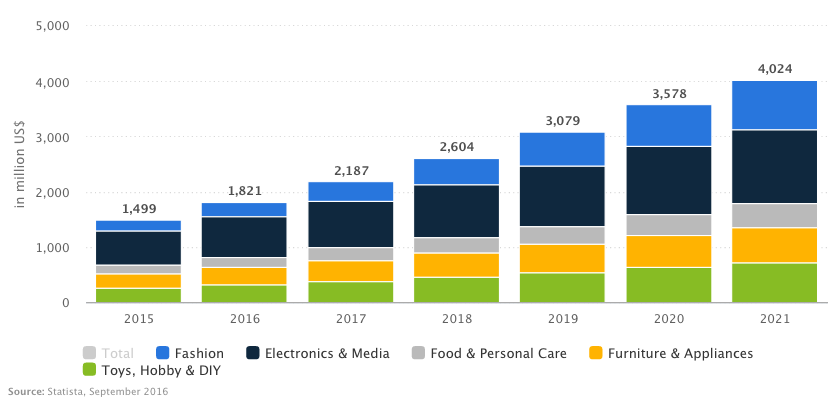
Naturally, platforms want a piece of the multi-billion-dollar pie. Lazada and Sendo topped Vietnam’s ecommerce market in 2014. But since then, there have been notable local competitors like The Gioi Di Dong, Vat Gia, and Tiki.
Facebook is also a marketplace that’s popular among the Vietnamese.
“I would look up what I need to buy on Facebook (for example, ‘swimsuit’) and shop from one of the online stores that show up in the results,” says Ha-My Nguyen, a high school teacher in Hanoi.
She feels that the Vietnamese often look to independent sellers on social media platforms rather than commercial websites when they want to buy something. For instance, her students shop a lot on Facebook.
“There are lots of independent sellers advertising their goods on Facebook pages and even Instagram, selling everything from cosmetics to homemade food. These sellers can afford to keep prices low because they don’t have to rent a shop, and goods you buy can be delivered to your doorstep for a modest fee of less than US$2,” Ms. Nguyen says.
But in merchant Nguyen Trung Hai’s opinion, Facebook is a media and not an ecommerce platform. He thinks that unsecured transactions are still a problem.
For now, sellers like Nguyen all have the same hope: for more and more Vietnamese people to buy online. Nguyen plans to eventually expand his business to sell gadgets and furniture.
This post The secret to this fast-growing Vietnamese marketplace’s success: tier-two cities and micro-merchants appeared first on Tech in Asia.
from Tech in Asia https://www.techinasia.com/sendo-ecomm-vietnam
via IFTTT

No comments:
Post a Comment