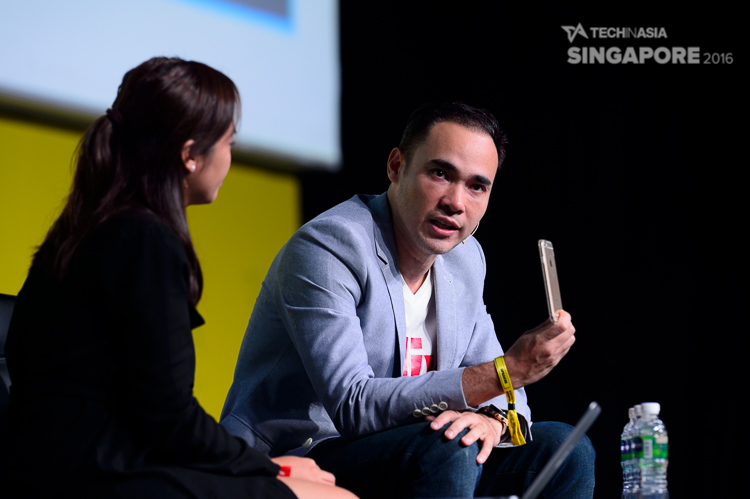
Catcha Group CEO Patrick Grove talks about iFlix at Tech in Asia Singapore 2016. Photo credit: Tech in Asia.
Malaysia-based Iflix, emerging markets’ answer to Netflix, today announced it closed a new funding round worth US$133 million to boost its production of local content as it aims for the “next billion users.”
The round was led by US publisher and TV station owner Hearst, which early this year revealed plans to be an active buyer of companies in an effort to rely less on its traditional media businesses. Other new and existing investors who also shelled out some cash include:
- EDBI, the investment arm of Singapore’s Economic Development Board
- some unnamed clients of DBS Private Bank
- Evolution Media
- Sky
- Catcha Group
- Liberty Group
- Jungle Ventures, and
- Philippines Long Distance Telephone Company
Founded in 2015, Iflix is available in 19 emerging markets, mainly in Southeast Asia – 15 of which it entered in just the past year. During said period, it claims to have seen a 230 percent year-on-year growth in revenue, plus three- and two-fold increase in subscriber numbers and engagement, respectively.
“We were looking for a partner who could bring additional expertise and knowledge to our business,” said Iflix co-founder and group CEO Mark Britt.
“These new funds will allow us to further execute on our local content strategy and expand our technology and development teams so we can continue to rapidly evolve the iFlix service to meet the unique challenges of emerging markets,” continued Britt.
Hearst – which owns newspapers, magazines, and TV assets such as ESPN and A&E Networks – would be looking for more acquisitions this year to reshape its business mix, its president and CEO Steven Swartz told his staff in his 2016 year-end letter quoted by Bloomberg. That year Hearst spent more than US$2 billion on acquisitions, the largest of which was a company providing safety data and maintenance to corporate jet owners.
Whereas traditional media ad revenue continues to decline, Swartz noted the internet has created “virtually unlimited places to put advertising.” Not to mention other revenue streams like subscription-based services.
Who’s leading?
Iflix is a perfect new avenue for Hearst. Iflix stands to gain from the rise in subscription-video revenue, which could reach US$120 million in Southeast Asia alone this year, Vivek Couto, executive director of Singapore research house Media Partners Asia, was quoted as saying by Forbes. In fact, Couto reckons Iflix’s share of the pie might be 35 percent or US$42 million.
Iflix is in the running to conquer the region’s video streaming space, where other players like US-based Netflix, Singapore-headquartered Hooq, and Hong Kong’s Viu are also trying to capture market share.
While Netflix and Iflix are often pitted against each other, Iflix co-founder and chairman Patrick Grove, also the entrepreneur behind Iflix backer Catcha Group, have insisted that the two are not direct competitors. He said Netflix chases the affluent crowd, who are willing to pay around US$10 a month, while Iflix is targeting emerging markets where its desired audience “earn a salary of less than US$10,000 a year” so it charges only US$2 to US$3 a month.
Those consumers also watch from their smartphones, which run on prepaid credit and sluggish internet speeds. That meant introducing easier payment methods (people can pay for their subscriptions through their cellphone bills) and streaming technology that’s better suited for the region.
Iflix also differentiates itself by offering a wider variety of local content. In the past year, the company said it increased its commitment to localization, producing 26,000 hours of subtitles in nine languages, with locally curated content for every market. It also started producing its own original content for some markets. As such, Iflix competes more with Asian players.
Data from analytics firm App Annie seems to confirm this. It shows Iflix is way ahead of Netflix in Malaysia, the Philippines, Indonesia, and Thailand in app rankings for Google PlayStore, but Neflix beats all players in advanced and wealthy Singapore – which isn’t a target market for Iflix. Hooq beats Iflix in Indonesia and ranks high in the Philippines as well, while Viu grabs a spot in the top 10 in all its markets: Philippines, Thailand, and Singapore. The rankings are a good gauge of how the apps are performing, incorporating factors like downloads and uninstalls, usage, growth trends, etc. It’s also crucial to note that Android dominates smartphones in Southeast Asia, in part due to cheaper phones.
In the meantime, Netflix’s rankings improve among users of iOS devices, which tend to be more pricey than Android.
In emerging markets outside Southeast Asia, Iflix mostly leads Google Play rankings, while Netflix is ahead in App Store rankings.
Citing the contrast between Iflix and Netflix, Grove doesn’t think video streaming will see a single winner. He said it’s possible for several players to co-exist.
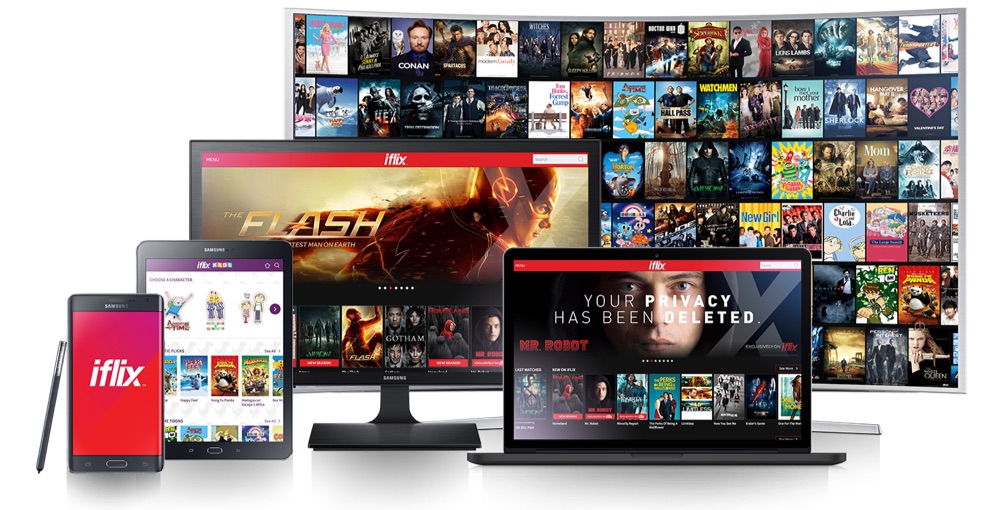
Image credit: Iflix.
Betting on more originals
Nevertheless, there’s one area where Netflix and Iflix share the same strategy: producing their own original content.
Netflix is behind award-winning US shows such as House of Cards and Orange Is The New Black.
Iflix, for its part, recently unveiled its first original production, Oi Jaga Mulut, a stand-up comedy series it debuted in Malaysia, and just signed a deal for an original drama series in the Philippines. Entering a new game, it started live streaming sports events, for example football in Indonesia.
The two companies have been steadily turning toward original content as the cost of licensing third-party ones continue to climb.
Iflix’s fresh funds will further fuel this strategy. “The cash burn in subscription video cannot be underestimated, especially in content costs,” said Media Partners Asia’s Couto in the Forbes report. He estimated a video streaming company would have to spend at least US$500 million to start to approach break-even in Southeast Asia alone.
The new round comes hot on the heels of Iflix’s US$90 million series C round in March, and brings its total disclosed funding to over US$220 million this year alone, and nearly US$300 million to date.
This post Iflix raises $133m as it dominates Netflix in parts of Asia appeared first on Tech in Asia.
from Tech in Asia https://www.techinasia.com/iflix-133-m-funding-local-content
via IFTTT

No comments:
Post a Comment